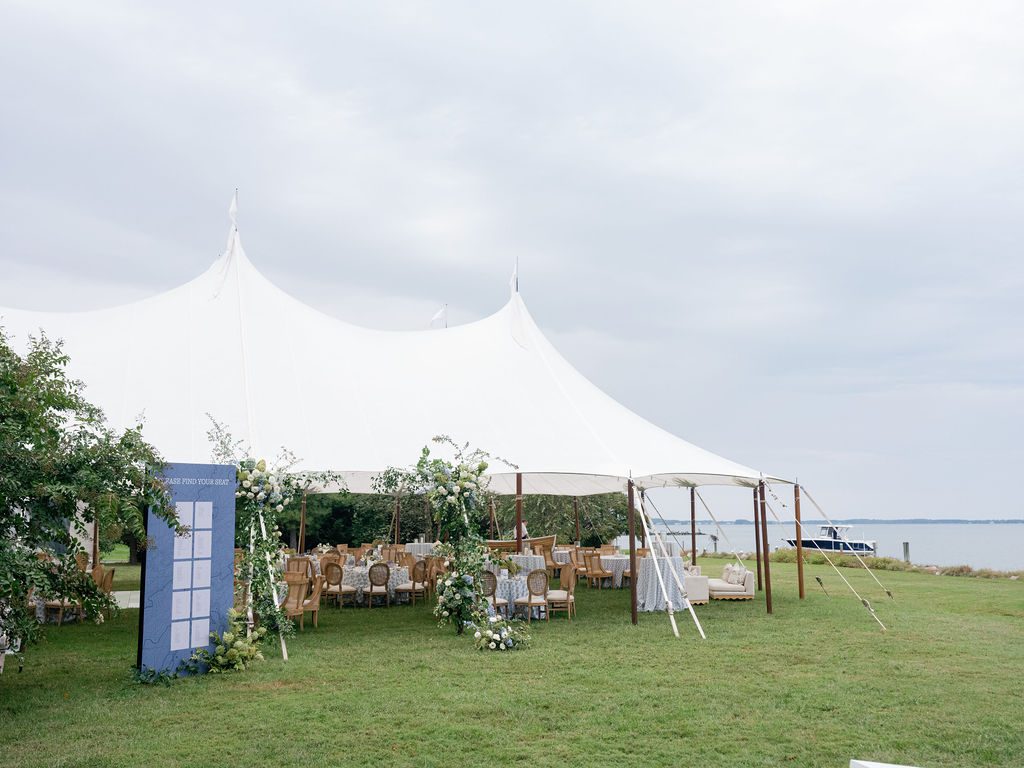
It’s understandable that so many couples search the internet for how to plan a home wedding. A wedding at home can be wonderful in a way that’s difficult to replicate at a traditional venue. Maybe it’s the family property where you spent every summer growing up. Perhaps it’s a home with a garden you’ve loved for years, or a place with enough land to bring everyone together for a long weekend of celebrating.
There’s a personal quality to these weddings that we love. The setting already has a story, and the couple gets to add another chapter to it.
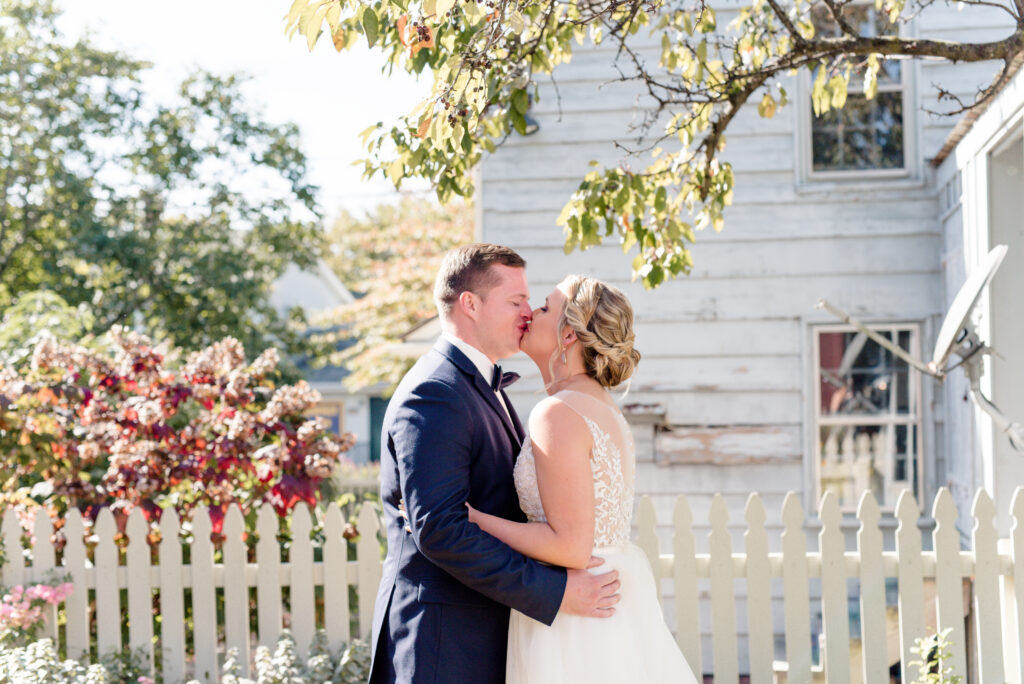
But there’s something else about home weddings that deserves just as much attention as the setting itself: the amount of work required to make a private property function as an event venue.
A house may be perfect for hosting a family dinner, but a wedding for 150 guests is an entirely different undertaking. You’ll need to think about where everyone will park, how the caterer will prepare dinner, whether there’s enough power for the band, and where guests will go if it rains. You may also need to bring in restrooms, lighting, a tent, flooring, and equipment you wouldn’t necessarily need at an established venue.
None of this means you shouldn’t host your wedding at home. It means you need to evaluate the property with a different set of eyes.
When couples ask us how to plan a home wedding, we encourage them to start with logistics before getting too far into the design. Those decisions will shape what’s possible, how much the wedding costs, and how comfortably the day flows.
Here are the details we’d want you to think through before making plans.
Start by figuring out what the property can accommodate
Before choosing a ceremony location or deciding where the dinner tent will go, spend time looking at the property as a whole.
A beautiful lawn can be deceiving. It might have enough room for a tent but not enough level ground for the tent, a catering area, and guest parking. The ideal ceremony spot might be a long walk from the house, or the only place large enough for dinner might sit on a slope that complicates table placement.
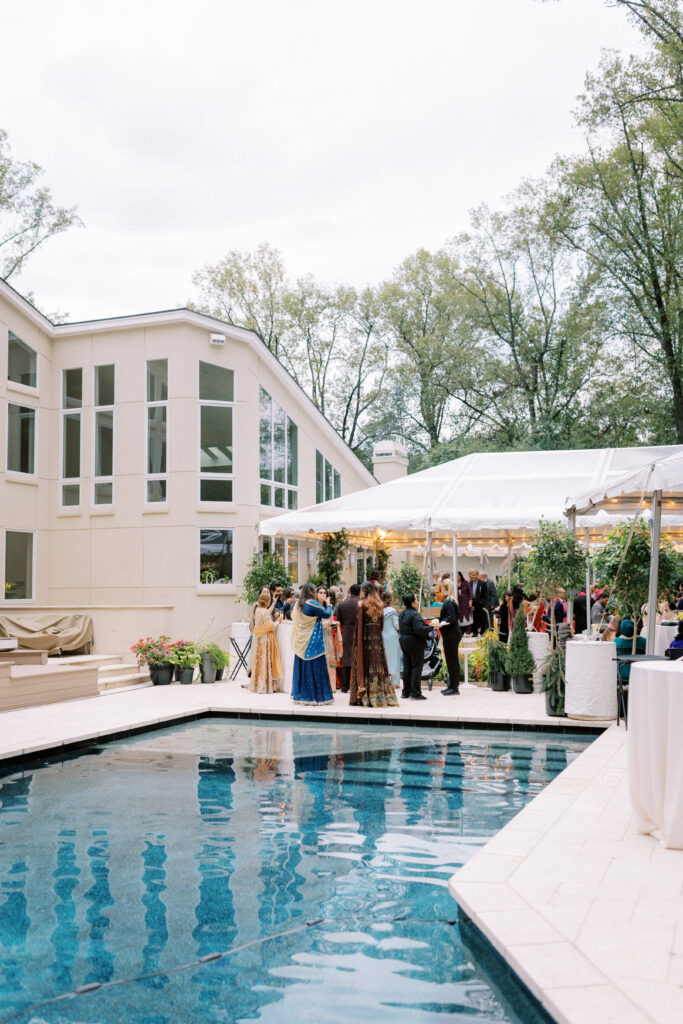
Walk the grounds with your planner and your rental company. Look at the available spaces, the terrain, the driveway, and the paths vendors and guests will need to use. Watch for things that could affect tent placement or equipment installation, like trees, gardens, underground utilities, septic systems, and property boundaries. Every property presents its own opportunities and challenges. You can see how we’ve approached the possibilities of a private property in this South Asian home wedding.
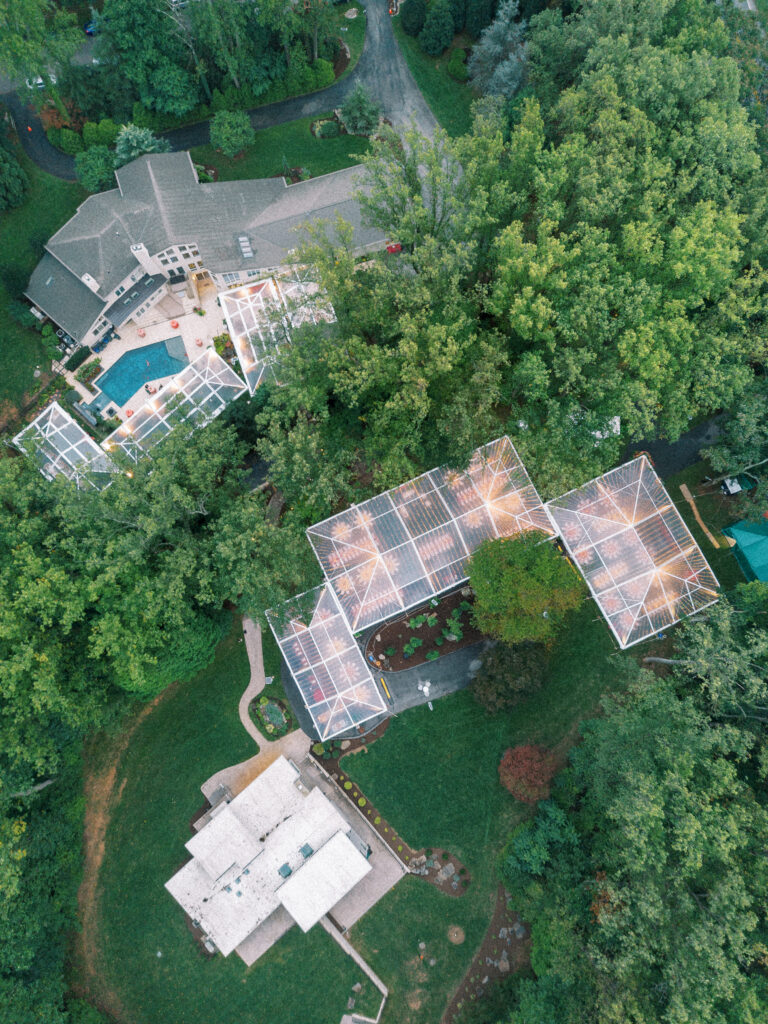
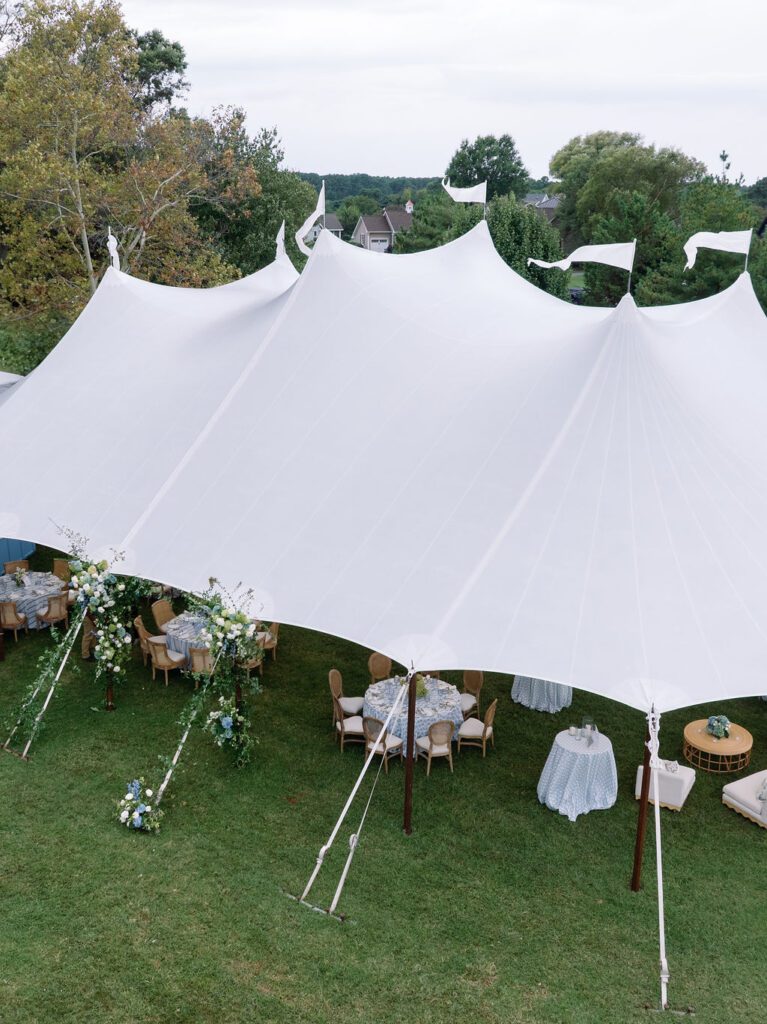
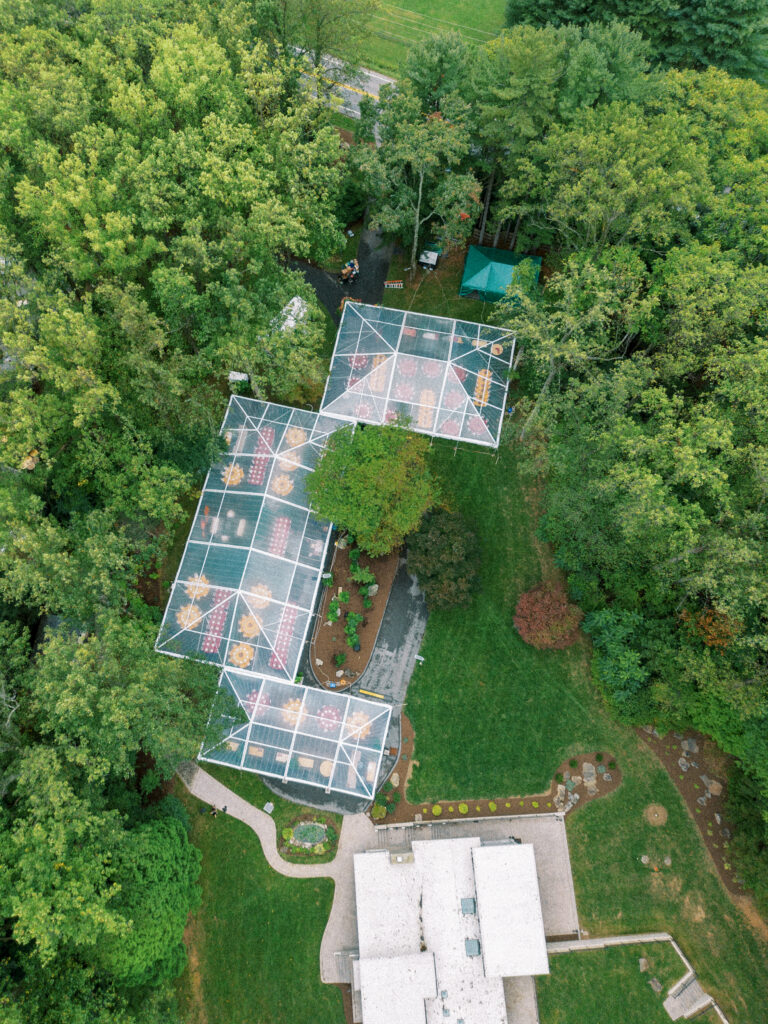
If you’re considering a large tent, don’t wait until you’ve finalized the floor plan to have the site assessed. The tent needs more than enough room for tables. You’ll also need space for catering access, bars, entertainment, guest circulation, and any additional equipment. Depending on the property and local requirements, you may need permits, utility locates, or approvals for temporary structures.
Also consider how the property will function after dark and as the weather changes. A path that’s perfectly manageable in dry daylight may become muddy, slippery, or difficult to navigate at night.
One of the most important questions is whether every guest can comfortably participate in the celebration. If a guest uses a wheelchair, walker, or cane, can they easily reach the ceremony, dinner, and restrooms? Are there steep slopes, steps, gravel paths, or uneven lawns that could present challenges? Could temporary flooring or a different layout improve access?
These are much easier questions to address before you’ve committed to a design. In some cases, a small layout adjustment solves the problem. In others, choosing a different area of the property makes far more sense.
Parking is about more than finding enough space
One of the first practical questions is where everyone will park.
A large driveway or open field might seem sufficient, but you’ll need to think about how many vehicles will arrive, whether the ground can support them, and how they’ll get in and out. A grassy parking area can become a problem after heavy rain, and a driveway that’s wide enough for cars may not leave room for vendor deliveries and other traffic.
Even with ample parking, a parking attendant can be helpful. Without someone directing cars, guests tend to park wherever they see an open space. That can leave unusable gaps, block other vehicles in, or create a bottleneck when everyone tries to leave at the end of the evening. An attendant keeps the parking organized and helps make better use of the available space.
If there’s not enough room on the property, you may need to arrange off-site parking and shuttle transportation. That means finding an appropriate parking location, coordinating shuttle schedules, allowing enough time for guests to arrive, and planning for the end of the night.
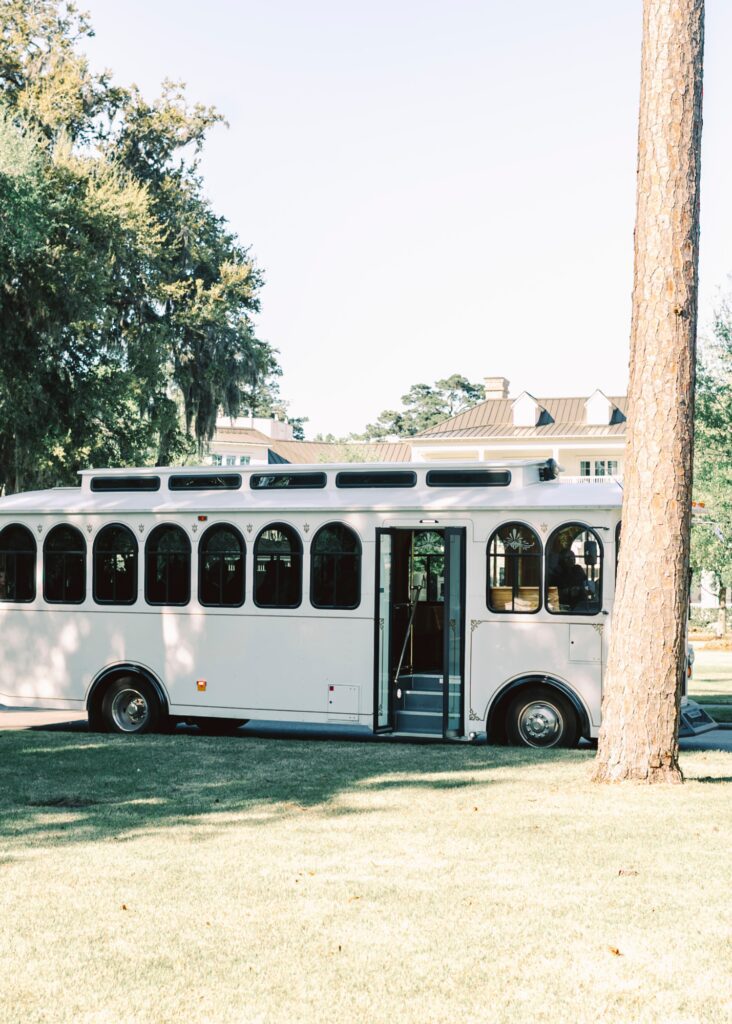

Another consideration that can easily get overlooked is the distance between parking and the event itself. Guests wearing heels may have difficulty with a long walk across grass, while older relatives or guests with mobility limitations may need to be dropped off closer to the entrance. If you need shuttles, find out whether accessible transportation is available for anyone who requires it.
Finally, decide how guests will know where to go when they arrive. A clear entrance and someone to greet them and direct them to the ceremony can make a big difference. You don’t want guests’ first experience of your wedding to be wandering around the property trying to figure out where the celebration is happening.
Give the ceremony, cocktail hour, and reception their own plan
One of the pleasures of a home wedding is using different parts of the property throughout the day. A garden might be the perfect place for the ceremony, a terrace could work beautifully for cocktails, and a tent on the lawn might become the setting for dinner and dancing.
The important thing is to consider how each location will actually function, not just how it will look in photographs.
For the ceremony, think about the view, the direction of the sun, and where guests will sit. Will everyone be able to see the couple? Is there enough room for the aisle, chairs, and floral installations? Will guests be sitting in direct sunlight for an extended period?
The route to the ceremony is important too. A secluded garden may be lovely, but if the only way to reach it is across uneven ground or down a steep slope, it may not be the best choice for your guest list. Seating arrangements should also leave room for guests who need additional space or a chair that’s easier to get in and out of.
Cocktail hour brings a different set of needs, and it’s easy to underestimate how much space you’ll need. In addition to bars, food stations, and cocktail tables, you’ll need enough space for guests to mingle without feeling crowded. If you’re moving everyone to a new area, consider how long the walk is and whether the path will be comfortable for everyone. Also, depending on the time of day, you may need to add umbrellas for shade or add lighting so guests can see when the sun sets.
Dinner and dancing often require the most space. A tent may be necessary, especially if there’s no indoor alternative, but don’t assume that one tent solves everything. You’ll need room for guest tables, catering, entertainment, bars, and a dance floor, plus enough space for guests and staff to move around.
Sometimes it makes sense to keep dinner and dancing together, but in other cases, separating the two creates a more natural flow. The right arrangement depends on the property and the kind of celebration you want to host.
What matters most is that guests can move comfortably from one part of the wedding to the next. A beautiful setting loses some appeal if guests have to follow a difficult path or squeeze between tightly packed tables.
The rentals you need may surprise you
At a traditional venue, many of the essentials are already there. At home, you may need to bring in nearly everything.
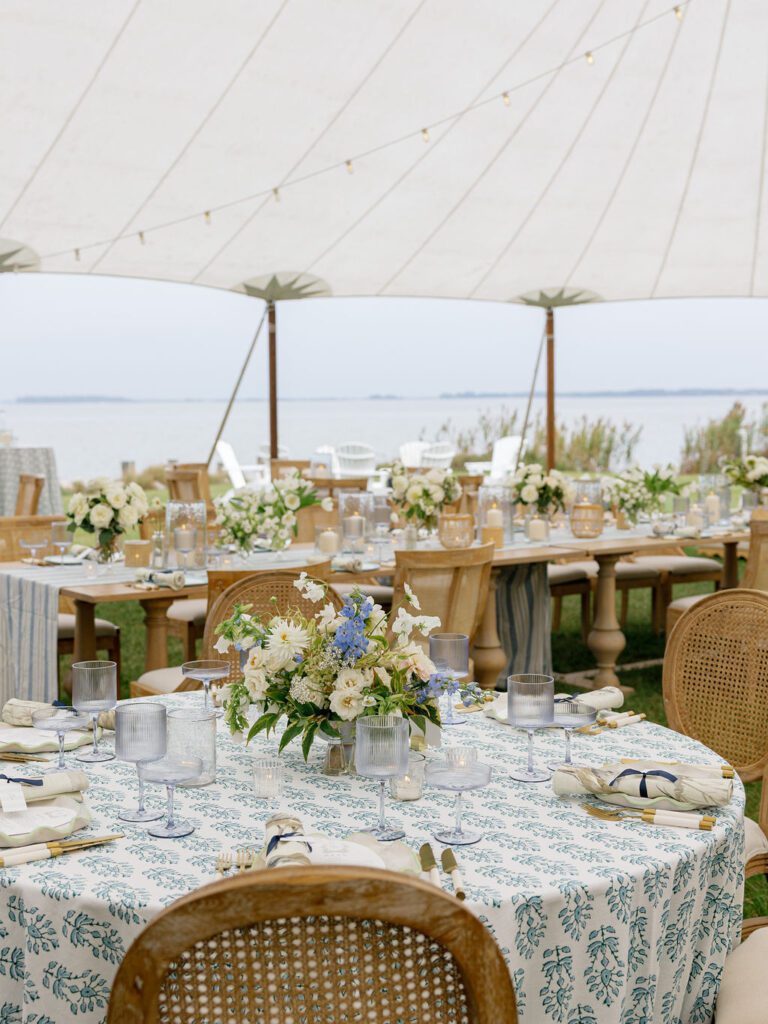
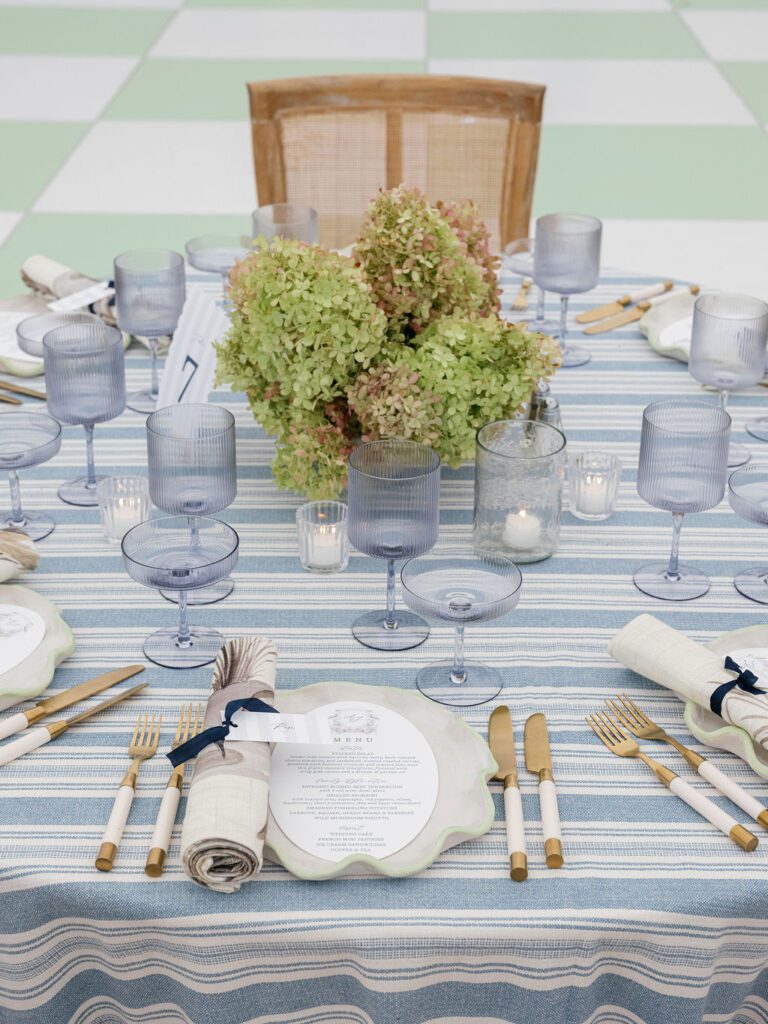
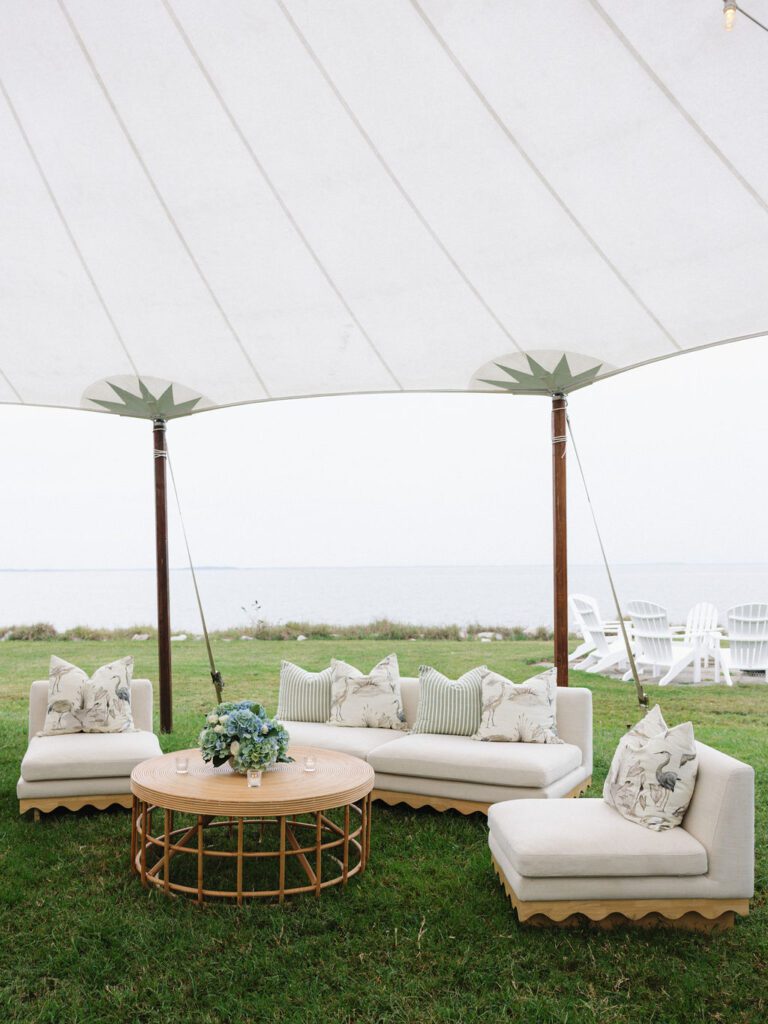
Tables, chairs, linens, and a tent are usually on a couple’s radar. Other items are easier to overlook: flooring, a dance floor, portable bars, lounge furniture, staging, catering equipment, lighting, and climate control.
The property itself will determine what you need. A tent on level ground may need a different setup from one on a lawn with a noticeable slope. Depending on the season and forecast, you may need sidewalls, heating, or cooling. And if the reception takes place on grass, a dance floor can provide a much more comfortable surface than asking guests to dance on uneven ground.
The cost of rentals goes beyond the cost of the equipment itself. Delivery and labor fees are often added to the final bill. Difficult site access or long distances between the delivery point and the setup location can increase those costs, too.
When you review your rental proposal, make sure it includes everything you need for the entire event. Also, pay close attention to the layout. You want to be sure that all guests, including those with mobility aids, will be able to move through the space comfortably.
A site visit with your planner and rental company can help answer these questions before you finalize the budget. It’s much better to discover that a tent needs additional flooring or a different placement during the planning process than when the rental crew arrives.
Your caterer needs a kitchen, even if your house has one
Your home kitchen may be lovely, but it probably wasn’t designed to prepare and serve dinner for a large wedding.
Depending on your guest count and menu, your caterer may need a temporary catering tent or a dedicated work area with prep tables, refrigeration, cooking equipment, handwashing facilities, and access to water and electricity.
Ask your caterer what they’ll need before you settle on the reception layout. The catering area has to fit somewhere, and its placement affects how the rest of the property works.
Ideally, the team can receive deliveries and move equipment without disrupting the guest experience. They also need a practical route between the preparation area and the dinner tables. If staff have to carry food long distances, navigate narrow paths, or work around guest traffic, service can become more complicated and may require additional labor.
This is one reason home wedding budgets can be harder to estimate than couples expect. The menu is only part of the catering cost. The equipment, staffing, setup, and infrastructure needed to serve that menu also matter.
Discuss these requirements early enough that your caterer can help shape the site plan. Their needs are just as important as the placement of the bar or the design of the reception tent.
Restrooms deserve more attention than they usually get
It’s not the detail anyone is most excited to plan, but restroom access can make a real difference to your guests’ comfort.
The bathrooms inside the house may not be sufficient for your guest count. You may also prefer to keep guests out of private areas of the home, especially if the wedding takes place mostly outdoors.
Portable restroom trailers can be a good solution, but they need a suitable location. You’ll need to consider access for delivery and servicing, the distance from the main event spaces, and how the facilities will be screened from view.
Don’t tuck them so far away that guests struggle to find them. At the same time, you probably don’t want them sitting directly beside the dinner tent.
Accessibility is important here, too. If a guest needs an accessible restroom, confirm that the facilities themselves meet their needs and that there’s a stable, practical route to reach them. A trailer that is technically nearby may still be difficult to access if the path crosses a lawn or uneven ground.
The same thinking applies to the rest of the property. A home wedding may have beautiful grounds, but that doesn’t mean every guest will find them easy to navigate. Consider accessibility when choosing locations, arranging seating, planning routes, and deciding where to place amenities.
These details are part of hosting well. You want everyone to be able to enjoy the celebration without having to work around avoidable obstacles.
Lighting needs to extend beyond the tent
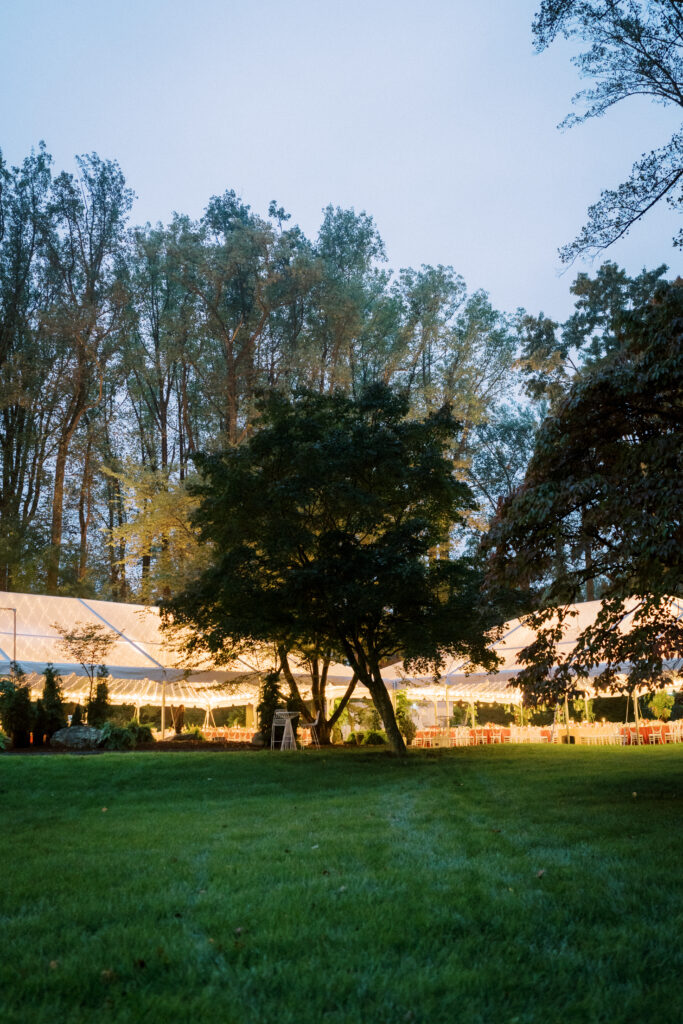
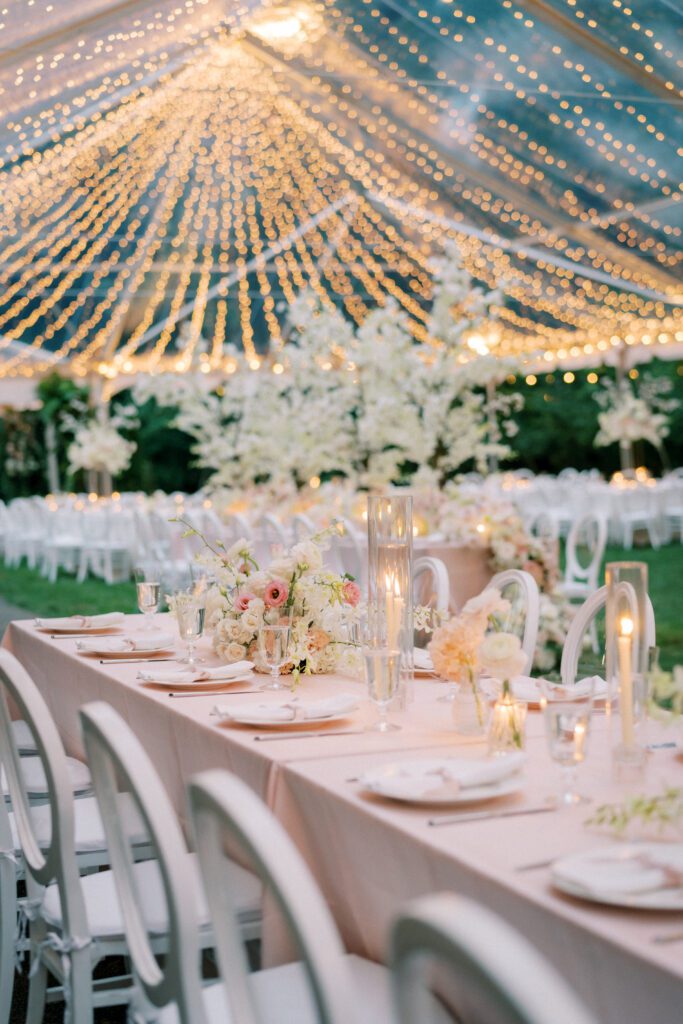
Lighting is often one of the most beautiful elements of a home wedding. Chandeliers overhead, candlelight on the tables, and string lights across the lawn can completely transform a property after sunset.
But the decorative lighting is only part of the picture.
Think about the path to the restrooms, the steps near the house, the route between dinner and dancing, and the walk back to the parking area. These spaces need enough light for guests to move around safely.
This is especially important on properties with uneven terrain or long pathways. Guests may be wearing formal shoes while carrying drinks and trying to navigate an unfamiliar space in the dark. Anyone with limited vision or mobility may find these routes especially difficult.
Walk the property after sunset and look at it as a guest would. You’ll often notice areas that need additional lighting, even if they seemed perfectly fine during the day.
Once you’ve covered those practical needs, you can work on the atmosphere. Lanterns, landscape lighting, string lights, and tent lighting can make the property feel warm and inviting. Your lighting designer or rental company can help coordinate the different areas and determine what equipment is needed.
Just remember that lighting may require additional power, cabling, and installation. It’s easier to plan for that from the beginning than to add it after the rest of the rental order is complete.
Check the power and utilities before booking your vendors
A house can run perfectly well day to day and still lack the capacity to support a wedding.
Consider everything that may need electricity: catering equipment, a band or DJ, lighting, restroom facilities, and heating or cooling equipment. The combined demand can be considerably higher than the home’s normal usage.
Have qualified professionals inspect the existing electrical supply and determine what’s needed for the event. Depending on the setup, you may need generators, power distribution equipment, and properly rated cables and connections.
Don’t assume vendors can plug into the house. Coordinate power requirements in advance to make sure you have all of the appropriate equipment on hand.
Water access and waste management also deserve attention. Your caterer and restroom provider can explain what they need, including whether the existing facilities are sufficient or additional arrangements are necessary.
Don’t leave these decisions until the week of the wedding. Your planner can coordinate the vendors and make sure their requirements are considered together, while qualified professionals assess the technical details.
Find out what restrictions apply to the property
Before you commit to a home wedding, find out whether there are local rules that could affect your plans.
Depending on the property and location, you may need to investigate zoning, event permits, temporary structure approvals, fire and safety requirements, parking regulations, and noise ordinances. Requirements vary, so check with the appropriate local authorities rather than assuming a private residence is exempt.
It’s important to discuss music early, especially if you’re planning a live band or outdoor DJ.
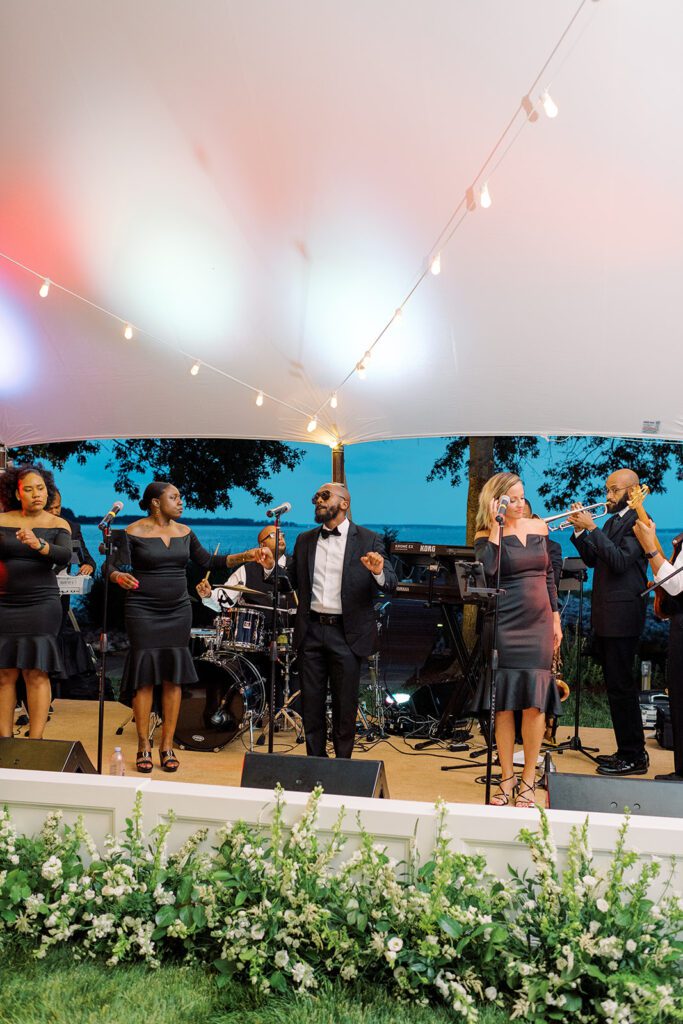
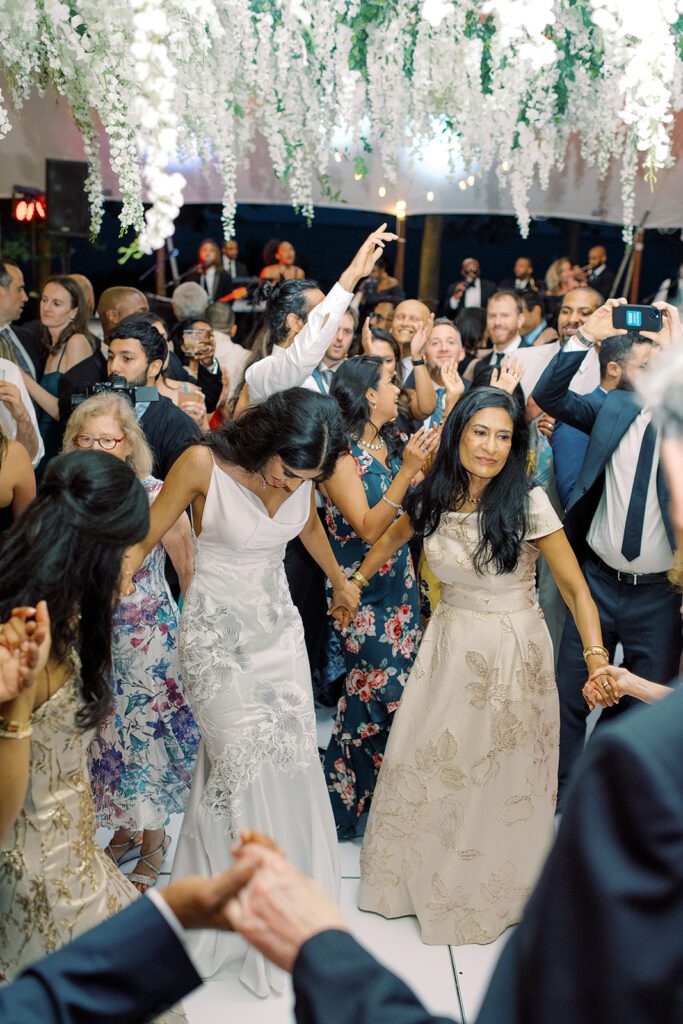
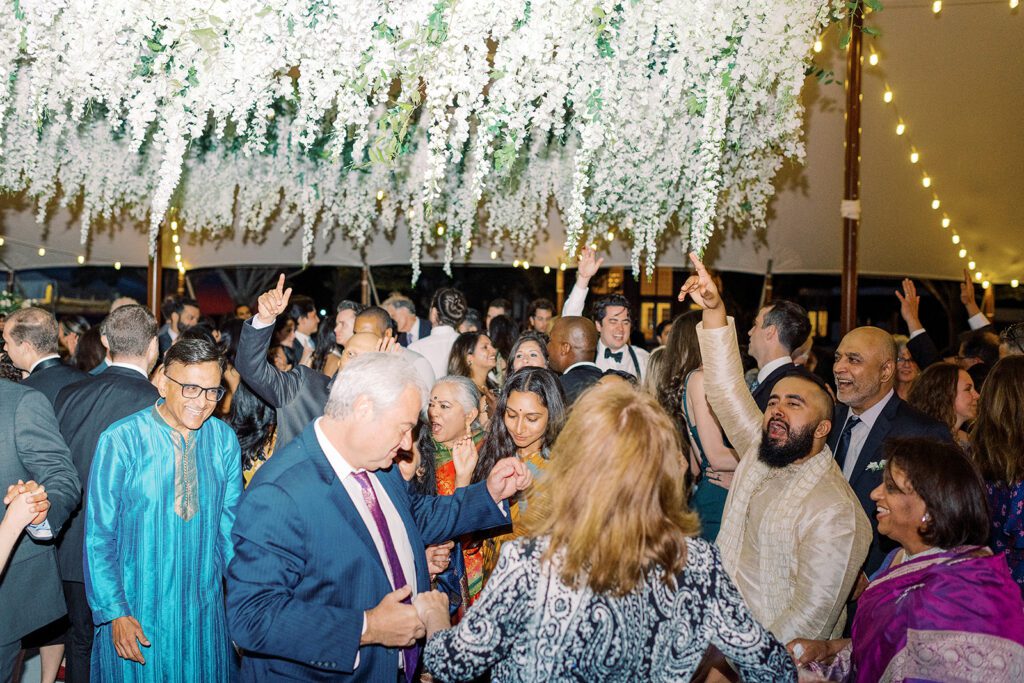
Sound carries differently across an open property than it does inside a venue. Neighbors may be farther away than you think, or closer than you realize. Even if the setting feels secluded during the day, amplified music can travel well beyond the reception area once the evening begins.
Talk with your entertainment team about any applicable restrictions. You may need to end the reception a little earlier, or plan to move dancing indoors at a certain point.
These limitations can influence the timeline and layout, so it’s better to understand them before making major decisions. The last thing you want is to discover that your planned outdoor dance party needs to end earlier than expected.
A rain plan needs to cover the entire property
Weather is one of the biggest considerations for an outdoor wedding, and a home wedding often requires more contingency planning than couples anticipate.
A tent provides overhead shelter, but it doesn’t automatically solve every weather problem. Heavy rain, wind, and extreme temperatures can all disrupt the celebration and leave guests uncomfortable. You’ll need to think through what happens to each part of the celebration if the weather changes.
Start with the ceremony. If the planned lawn becomes too wet or the wind makes the setup unsafe, where will the ceremony take place? Make sure you have an alternative plan that can accommodate all your guests. Also consider if chairs will need to be moved, and how much time that change will require.
Cocktail hour needs its own plan. Could guests move into the house or to another covered area? If the reception space isn’t ready for guests, who will coordinate the transition?
Dinner and dancing also need a plan. Depending on the tent and the conditions, you may need sidewalls, climate control, or a different layout. You should also consider whether the ground will remain usable after heavy rain.
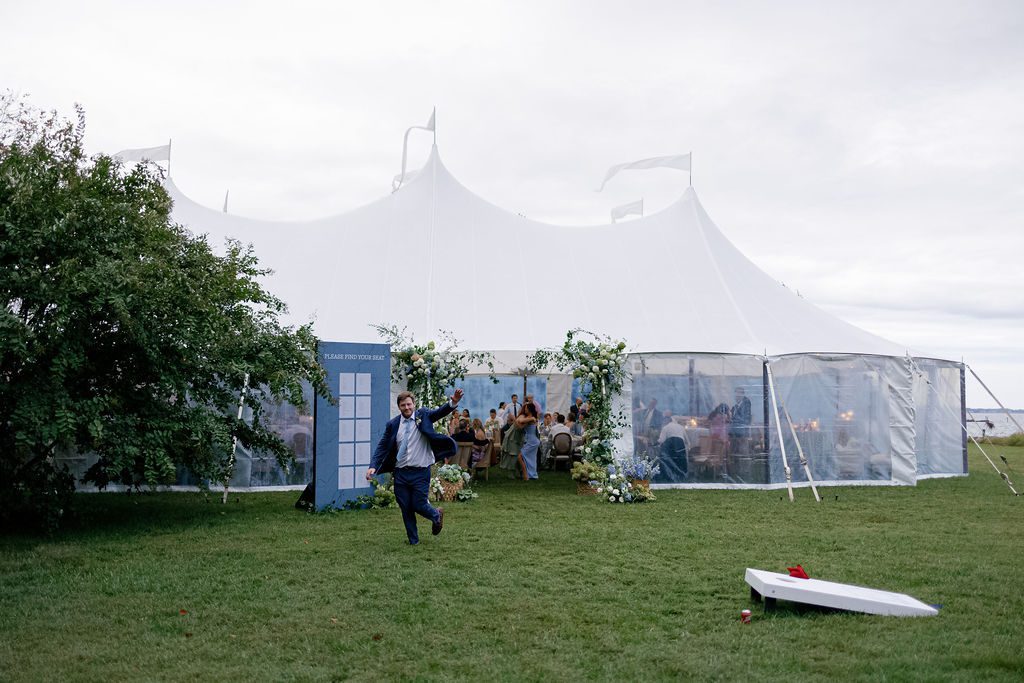
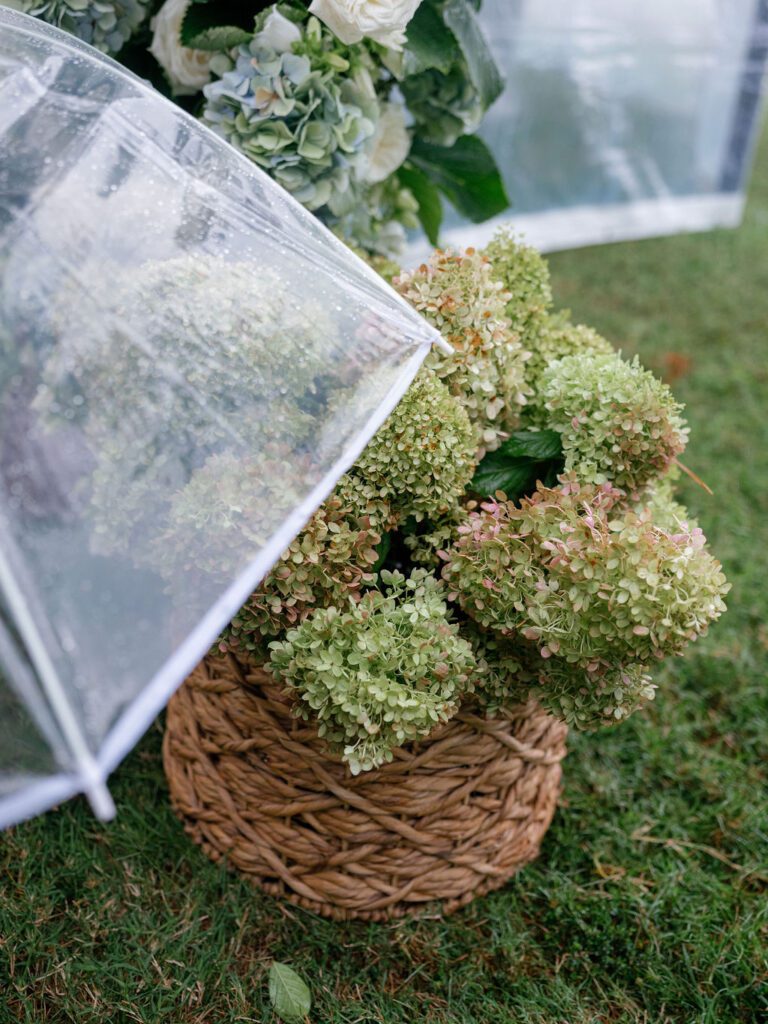
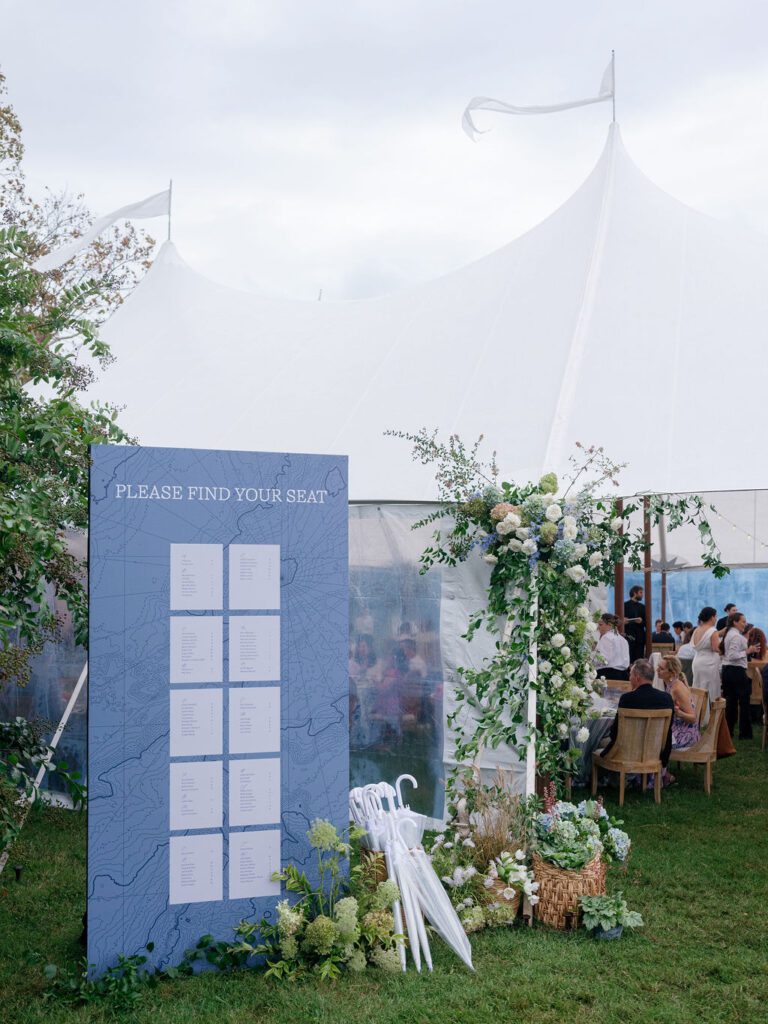
When planning for weather, don’t forget parking. A large field may work perfectly on a dry day, but heavy rains can leave it muddy and difficult to drive across. If rain could make the parking area unusable, make sure you have a backup plan in place.
Also think about the paths between event spaces. If guests need to cross grass or walk on an incline, rain may make the route slippery. You may need temporary flooring, an alternate route, or a closer drop-off location, especially for guests who have mobility concerns.
For each scenario, you’ll need a plan B. You should also decide who will make the call and how much notice your vendors need. Some changes can wait until the forecast becomes clearer. Others, particularly those involving tents and rentals, may require decisions in advance.
For outdoor celebrations, we also recommend working with a qualified meteorologist. A weather professional can provide more precise guidance as the wedding approaches and help your planning team make informed decisions when conditions change. We recently shared how this worked for one of our couples in our Outdoor Wedding Rain Plan feature, where a changing forecast didn’t necessarily mean changing the original plan.
A good rain plan isn’t just about having somewhere else to hold the ceremony. It’s about knowing how the entire celebration will adapt while keeping guests comfortable and the event running safely.
The best home weddings feel effortless because someone has thought through the details
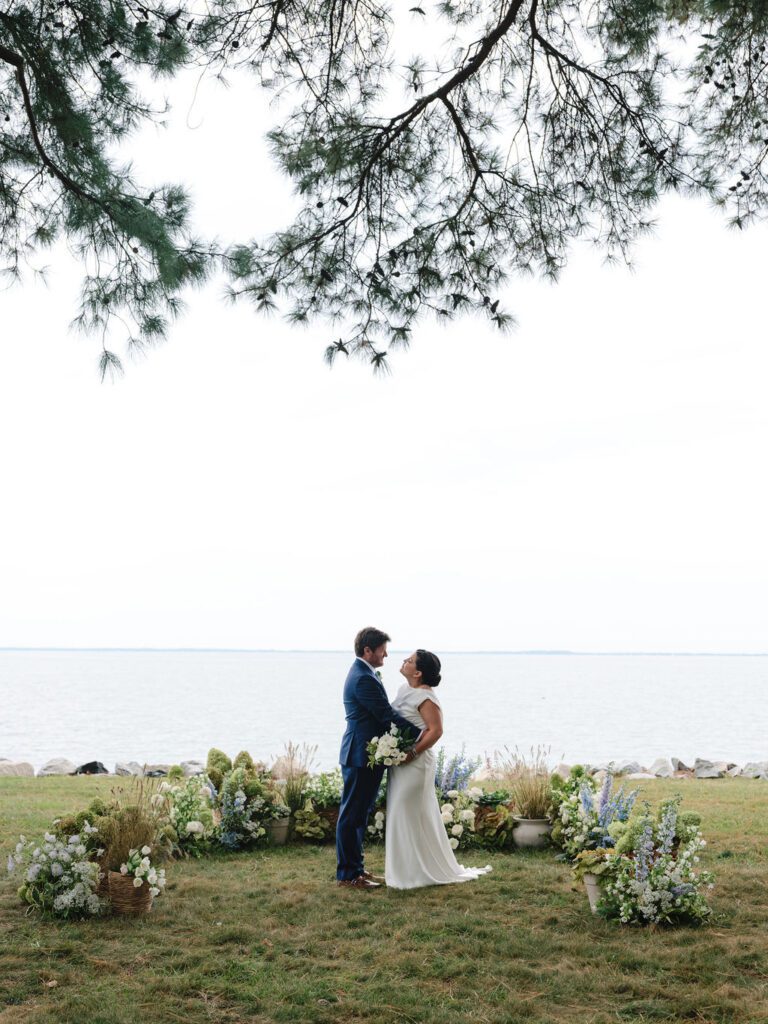
When couples imagine their wedding at home, they usually picture the moments that make the property special: the ceremony beneath a favorite tree, or dancing in a place filled with memories.
Those moments are worth protecting. And that means thinking just as carefully about the logistical details as the beautiful ones.
Guests shouldn’t have to wonder where to park, search for the restrooms, or follow a dark path after dinner. Someone who has difficulty walking shouldn’t have to miss the ceremony because the only route crosses an uneven lawn. Your caterer shouldn’t have to solve power or setup problems while guests wait for dinner.
This is why we strongly recommend full planning for home weddings. A private property brings a different set of responsibilities, and many of the most important decisions happen behind the scenes. The site plan, equipment rentals, utilities, transportation, vendor management, and weather contingencies all need to work together.
At Nouvelle Weddings, we look at the property as a whole. We think about how the day will unfold, where vendors need to work, how guests will move through the space, and what might need to change if the weather doesn’t cooperate.
The goal isn’t to make a home wedding feel like a traditional venue. It’s to make the most of what makes the property special while ensuring the celebration works for the people gathering there.
When those details are handled thoughtfully, guests can settle in and enjoy themselves. And you can spend the evening with the people you love instead of worrying about whether the parking area is filling up or what happens if it rains.
That’s what we mean when we say we create weddings that feel like home.
xoxo

Briana is the founder and creative force behind Nouvelle Weddings, a wedding planning and design company serving Maryland, Washington, D.C., Northern Virginia, and Charleston, South Carolina. She believes the most memorable weddings are not simply beautiful—they’re thoughtfully planned, deeply personal, and welcoming from the moment guests arrive. Her goal is to create celebrations that feel effortlessly elegant and, above all, feel like home.


